What Are Common Problems in Vegetable Freezing Systems?

Time:2026-10-08 Author:Madeline
0%

Vegetable freezing looks simple until a production line begins losing color, texture, and yield. The question “what are common problems in vegetable freezing systems” deserves a practical answer, not a generic equipment list. In real plants, small temperature changes can create large quality differences. A pea may leave the freezer bright green, yet appear dull after storage. A carrot may look firm outside, but turn soft after thawing.

Dr. Da-Wen Sun, a respected food-freezing researcher, has stated, “Freezing is one of the most important methods of food preservation.” His observation also highlights a limitation: freezing does not repair poor preparation. Inadequate blanching can leave enzymes active. Excessive blanching can damage firmness and nutrients. Uneven airflow may produce dry edges, wet centers, or inconsistent freezing times. Those problems often begin before the product reaches the freezer.

This article examines common failures across blanchers, conveyors, evaporators, compressors, and cold-storage rooms. It also considers ice-crystal growth, freezer burn, belt loading, sanitation, and temperature monitoring. A blocked evaporator can quietly reduce cooling performance. A poorly calibrated sensor can mislead operators for hours. These details matter.

Not every issue has one cause.

Sometimes, the process design is acceptable, but maintenance is weak. Sometimes, operators adjust settings without recording results. That habit makes troubleshooting harder. Reliable control requires measured product temperatures, documented cleaning, and regular inspection. The discussion will remain practical, evidence-based, and honest about uncertainty. Some recommendations may need adaptation for each vegetable, line speed, and freezing method.
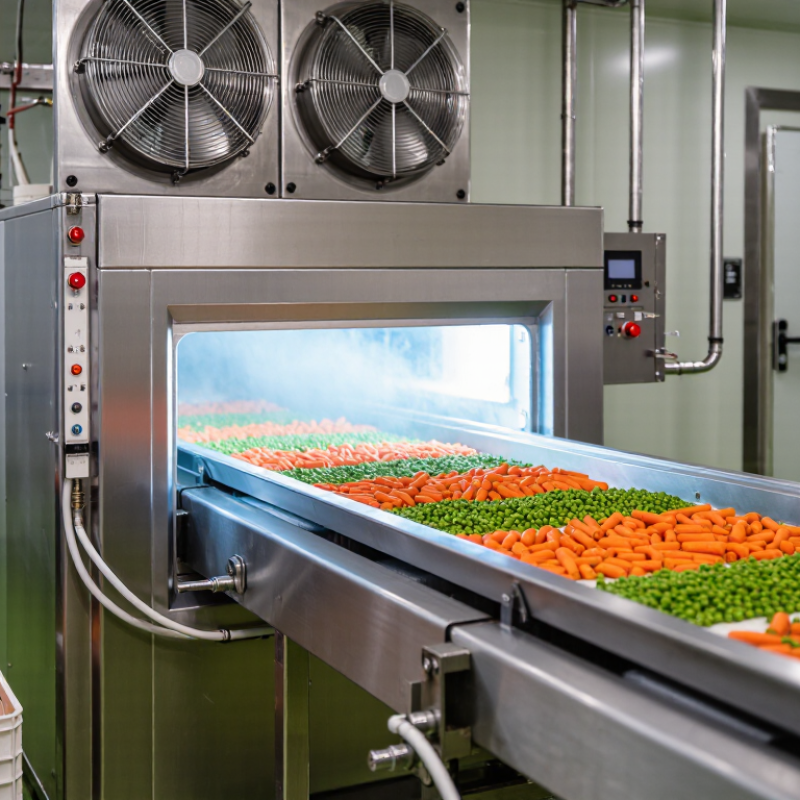
What Are Common Problems in Vegetable Freezing Systems?

Types of Vegetable Freezing Systems and Their Main Components

Vegetable freezing systems generally fall into four types: air-blast, fluidized-bed, plate, and cryogenic systems. Air-blast freezers use high-speed cold air around trays or belts. Fluidized-bed units suspend small vegetables, such as peas, for rapid and even cooling. Plate systems suit flat packs, while cryogenic systems use liquid nitrogen or carbon dioxide for very fast surface freezing. Each method changes texture, energy use, and maintenance requirements.

The main components include a compressor, condenser, evaporator, fans, insulated enclosure, conveyor, sensors, and control software. Defrost equipment matters too. Ice can block airflow and create warm zones. Poor belt loading may leave carrots frozen outside but soft inside. The International Institute of Refrigeration reported that improved refrigeration could prevent about 526 million tonnes of food loss annually. That figure shows why stable temperature control is not a minor detail.

Common problems often begin before freezing. Wet vegetables can form thick ice layers, while slow freezing produces larger crystals and weaker texture. FAO’s The State of Food and Agriculture 2019 estimated that 14% of food is lost between harvest and wholesale. Operators should check product temperature, air speed, humidity, and residence time together. In my experience, temperature readings alone can mislead. A sensor may look normal while overloaded trays restrict airflow. The system diagram is tidy. The real freezer is not.

Common Causes of Uneven Freezing in Vegetables

Uneven freezing in vegetables usually begins with uneven airflow, not the freezer setting. In practical plant audits, bags near the evaporator often freeze faster than those in the center. Airflow can weaken when coils collect frost, filters clog, or pallets sit too closely together. Small gaps matter.

Vegetable size also changes freezing speed. Thick carrot pieces need more time than thin slices. If the product enters above the designed temperature, surface ice forms first while the core remains soft. This creates large ice crystals and damages cell walls. The ASHRAE Handbook—Refrigeration identifies air circulation, product loading, and heat transfer as key controls in industrial freezing systems. Operators should record core temperature, not only room temperature. A cold room does not prove uniform freezing.

Moisture loss creates another warning sign. Exposed vegetables may develop pale, dry patches when packaging seals poorly or air moves too quickly. FAO’s The State of Food and Agriculture 2019 reported that about 14 percent of global food is lost between harvest and wholesale. Freezing cannot repair weak handling before processing. Line teams should check cut-size variation, belt spacing, residence time, and temperature at several pallet positions. The diagnosis is rarely perfect. One overlooked sensor can distort the entire picture.

What Are Common Problems in Vegetable Freezing Systems? – Common Causes of Uneven Freezing in Vegetables
Problem Area Common Cause Typical Symptoms Effect on Product Quality Recommended Checks Corrective Action Priority
Uneven air distribution Blocked air passages, damaged fans, incorrect damper settings, or poor product loading patterns. Some packages freeze quickly while others remain soft or show a wide temperature variation across the belt. Inconsistent texture, variable shelf life, and non-uniform product temperature. Measure air velocity and temperature at several points across the freezing zone; inspect fans, ducts, and dampers. Remove obstructions, balance the airflow, repair fans, and maintain the designed product spacing. High
Excessive product loading Product depth or belt loading exceeds the system design capacity. Longer freezing time, warm centers, belt congestion, and product overlap. Partially frozen vegetables may clump together and suffer quality loss during storage. Compare actual loading rate, product depth, and belt speed with the equipment operating specification. Reduce the feed rate, control layer thickness, and prevent overlapping pieces. High
Incorrect belt speed The conveyor moves too quickly for the product size, moisture content, or required final temperature. Product exits the freezer before the core reaches the target temperature. Higher risk of ice crystal growth, clumping, and reduced storage stability. Verify belt speed and compare actual product-core temperatures with validated process limits. Adjust belt speed gradually and confirm the change using calibrated temperature measurements. High
Improper product size or shape Mixed cuts, inconsistent dimensions, or unusually thick pieces enter the same freezing cycle. Small pieces are frozen while thick pieces remain warmer or require additional residence time. Different textures after thawing and inconsistent cooking performance. Check cutting-screen settings, piece-size distribution, and product thickness before freezing. Standardize cutting dimensions, separate oversized pieces, and use suitable process settings. Medium
High or variable product temperature Insufficient precooling, delays between blanching and freezing, or inconsistent upstream process control. Freezer load changes during production, causing fluctuating outlet temperatures. Increased refrigeration demand, longer freezing times, and uneven final quality. Record product temperature at the freezer inlet and monitor the time between blanching, cooling, and freezing. Improve precooling, reduce transfer delays, and stabilize upstream production conditions. High
Inadequate refrigeration capacity Compressor, condenser, evaporator, or refrigerant-system performance is below the required load capacity. Evaporating temperature rises, freezing time increases, and product temperature remains above target. Reduced throughput and persistent soft spots, especially during peak production. Review suction pressure, discharge pressure, evaporator temperature, condenser condition, and compressor operation. Clean heat-transfer surfaces, service refrigeration components, and match production load to available capacity. High
Frost or ice accumulation Moisture infiltration, ineffective defrosting, poor door or seal condition, or excessive product moisture. Restricted airflow, reduced heat transfer, and visible ice buildup on coils, belts, or tunnel surfaces. Longer freezing times, uneven product temperatures, and increased energy consumption. Inspect evaporator coils, defrost cycles, door seals, air leaks, and humidity conditions. Restore defrost intervals, repair seals, control moisture entry, and remove accumulated ice safely. High
Dirty heat-transfer surfaces Food residue, dust, oil, or scale reduces heat transfer across evaporator and condenser surfaces. Lower cooling performance, higher operating pressures, and gradual temperature drift. Increased freezing time and higher operating costs. Inspect coil, filter, condenser, and air-handling surfaces according to the sanitation schedule. Clean and sanitize approved components using procedures that do not damage fins or sensors. Medium
Inaccurate temperature sensors Sensor drift, poor placement, damaged probes, or inadequate calibration. Displayed temperatures do not match independent product or air-temperature measurements. Operators may make incorrect adjustments or release product outside process limits. Compare control-panel readings with calibrated reference instruments at multiple locations. Recalibrate or replace faulty sensors and position probes at representative measurement points. High
Excessive moisture or surface water Incomplete draining after washing or blanching, excessive wash water, or poor dewatering. Wet product surfaces, ice buildup, clumping, and variable freezing rates. Product pieces adhere to one another and may develop undesirable surface ice. Check dewatering equipment, drainage time, surface moisture, and water carryover before freezing. Improve dewatering, control wash-water carryover, and maintain consistent blanching and cooling conditions. Medium
Air leakage or poor insulation Damaged panels, open access doors, worn gaskets, or unsealed service penetrations. Warm-air infiltration, condensation, frost near openings, and unstable freezer temperatures. Higher energy use and reduced temperature uniformity throughout the system. Inspect panels, doors, gaskets, joints, and access points for visible gaps or condensation. Replace seals, repair insulation, minimize door opening time, and seal air leaks. Medium
Improper defrost management Defrost is too short, too infrequent, or performed during unsuitable production conditions. Progressive frost accumulation or unnecessary production interruptions. Unstable capacity, airflow restriction, and inconsistent freezing performance. Review defrost frequency, duration, coil condition, and temperature recovery after each cycle. Set a condition-based defrost schedule and verify complete ice removal before restarting production. Medium

Effects of Temperature Fluctuations on Frozen Vegetable Quality

What Are Common Problems in Vegetable Freezing Systems?

Effects of Temperature Fluctuations on Frozen Vegetable Quality

Temperature fluctuations are among the most damaging problems in vegetable freezing systems. Even short warming periods can partially melt surface ice. Later refreezing creates larger ice crystals inside plant cells. This cellular damage causes soft texture, excessive drip, and dull color after thawing. Peas may lose their firmness, while sliced carrots can become watery and fragile.

The problem often begins with unstable airflow, overloaded chambers, or frequent door opening. A freezer may display -18°C, yet product temperatures can vary across different pallets. Surface readings alone can mislead operators. Product-core measurements provide more reliable evidence. Data loggers placed near doors, fans, and warm zones can reveal hidden temperature cycling. These details matter.

Small fluctuations repeat. That is the real concern. Recrystallization gradually reduces quality, even when vegetables remain safely frozen. Monitoring should include calibrated sensors, regular alarm checks, and documented response times. Operators should also leave enough space for air circulation. Overpacking seems efficient, but it can create warm pockets and uneven freezing. This is where our assumptions fail. Stable room temperature does not guarantee stable product temperature.

Blanching quality, packaging seals, and loading speed also influence the result. A weak seal allows moisture loss and freezer burn. Delayed loading gives vegetables more time to warm before freezing. Product tests should compare texture, drip loss, color, and core temperature after thawing. One inspection is not enough. Seasonal changes and maintenance errors can alter the pattern.

Equipment, Hygiene, and Maintenance Problems

Vegetable freezing systems often fail through small equipment problems. A worn door gasket lets warm air enter the freezing tunnel. Ice then forms around the evaporator, reducing airflow and increasing energy use. Temperature sensors may also drift, showing safe readings while product quality declines. The FAO’s 2019 State of Food and Agriculture report estimated that 14% of food is lost between harvest and retail. Poor freezing performance can contribute to this loss, especially when vegetables warm during transfers.

Hygiene problems are less visible but equally serious. Vegetable pieces can collect beneath conveyors, inside drains, and around cutting equipment. Moisture and plant residue create stubborn growth points. The FDA Food Code 2022 recommends cold holding at 5°C or below for temperature-controlled foods. Operators should verify this with calibrated instruments, not display panels alone. Cleaning schedules must identify contact surfaces, hidden corners, rinse steps, and inspection times. A checklist without physical inspection is not enough.

Maintenance should follow actual operating conditions. Frost thickness, compressor cycling, unusual vibration, and longer freezing times provide useful warnings. Cleaning filters and checking refrigerant performance can prevent avoidable shutdowns. Records should link each fault to its repair and verification result. This sounds basic. It is often skipped during busy harvest periods. A 2023 report from the International Institute of Ammonia Refrigeration emphasizes documented inspection and safe system management. However, maintenance plans still need human judgment. A perfectly completed form cannot explain why a freezer suddenly smells damp or why packages leave with soft centers.

Methods for Diagnosing and Preventing Freezing System Failures

What Are Common Problems in Vegetable Freezing Systems?

Methods for Diagnosing and Preventing Freezing System Failures

Vegetable freezing systems often fail through uneven temperatures, restricted airflow, or excessive ice buildup. I have seen peas freeze well near the evaporator, while containers farther away stayed soft. Start by checking product temperature at several points, not only the control panel. A calibrated probe can reveal hidden warm zones. Record readings during loading, freezing, and unloading. Patterns matter.

Inspect fans, air passages, door seals, and defrost cycles. Blocked airflow may come from overloaded shelves or poorly arranged packages. Frost around an evaporator can indicate moisture entry, delayed defrosting, or a damaged seal. Temperature sensors also drift over time. That detail is easy to miss. Compare sensor readings with an independent thermometer before replacing major components. Review compressor cycling and unusual sounds, but avoid guessing from noise alone. The diagnosis may still be incomplete.

Tips: Keep vegetables evenly sized and avoid overloading the chamber. Leave clear spaces around air outlets. Check door seals weekly. Clean sensors carefully and document every alarm. Test the system under a normal production load, not only when empty. Preventive maintenance should include defrost verification, airflow inspection, and electrical checks by qualified personnel. I once treated frost as the main fault, but the real issue was poor loading practice. That mistake changed the inspection routine.

FAQS

What are the main types of vegetable freezing systems?

Air-blast systems circulate cold air around trays or belts. Fluidized-bed systems suspend small vegetables, such as peas. Plate systems suit flat packages. Cryogenic systems freeze surfaces very quickly.

Which components are important in a vegetable freezer?

Core components include the compressor, condenser, evaporator, fans, conveyor, sensors, and controls. The insulated enclosure protects stable temperatures. Defrost equipment matters too. Ice can block airflow and create warm zones.

Why do vegetables freeze unevenly?

Uneven airflow is a common cause. Frosty coils, clogged filters, and crowded pallets restrict circulation. Packages near the evaporator may freeze faster than center packages. Small gaps matter.

How does vegetable size affect freezing quality?

Thick carrot pieces need more time than thin slices. Mixed sizes freeze at different speeds. The surface may become hard while the center stays soft. That damages texture.

What should operators measure during freezing?

Measure core temperature at several product locations. Also record air speed, humidity, loading, and residence time. Check conditions during loading, freezing, and unloading. Room temperature alone can mislead.

How can poor loading create freezing problems?

Overloaded trays restrict airflow between packages. Tightly placed pallets can block air passages. Leave clear spaces near air outlets. The diagram may look perfect. The real freezer may not.

What signs suggest moisture or defrost problems?

Thick ice may indicate wet vegetables or delayed defrosting. Frost around an evaporator can suggest moisture entry or a damaged seal. Pale, dry patches may show poor packaging seals. Inspect carefully.

How can a team diagnose freezer failures safely?

Use a calibrated probe and compare it with system sensors. Inspect fans, door seals, air passages, and defrost cycles. Review compressor cycling and unusual sounds. Do not guess from noise alone.

What maintenance practices help prevent failures?

Check door seals weekly and clean sensors carefully. Document alarms and verify every defrost cycle. Inspect airflow and electrical systems with qualified personnel. Test under normal production loads, not only with an empty chamber.

Conclusion

Vegetable freezing systems typically include chilling or pre-cooling units, conveyors, freezing chambers, fans, refrigeration equipment, sensors, and control systems. When asking “what are common problems in vegetable freezing systems,” the main concerns include uneven airflow, overloaded conveyors, poor product spacing, and inconsistent freezing times. These conditions can leave some vegetables under-frozen while others lose texture or moisture.

Temperature fluctuations may cause ice crystal growth, color changes, nutrient loss, and reduced shelf life. Other problems often result from dirty surfaces, blocked air passages, worn insulation, inaccurate sensors, refrigerant issues, or insufficient maintenance. Poor hygiene can also increase contamination risks and affect product safety. To prevent failures, operators should monitor temperatures continuously, inspect airflow and equipment regularly, clean and sanitize contact areas, calibrate sensors, and keep maintenance records. Testing product temperature at different locations, checking conveyor loading, and investigating unusual energy consumption can help identify problems early and support stable freezing performance.

Madeline

Madeline

Madeline is a dedicated marketing professional with a wealth of expertise in our company's core offerings. With a keen understanding of the industry, she brings a unique perspective to her role, consistently delivering high-quality content that highlights the superior aspects of our products. As......