Top 10 Factors That Affect Yogurt Fermentation Time in Factories?

Time:2026-05-19 Author:Isabella
0%

Yogurt production is a complex process that hinges on fermentation time. Many factors influence this crucial phase, dictating not only the flavor but also the texture and nutritional quality of the final product. Reports from the International Dairy Federation indicate that fermentation duration can affect yogurt’s viability, impacting consumer preferences and market trends. Understanding what affects yogurt fermentation time in factories can lead to more consistent and high-quality products.

Temperature plays a significant role in the fermentation process. Studies show that optimal temperatures range between 110°F to 115°F (43°C to 46°C). Deviations can lead to either prolonged fermentation or inadequate acid formation. Additionally, the choice of starter cultures is vital. Different bacterial strains exhibit varying fermentation rates and flavor profiles.

Moreover, factors such as pH, milk composition, and even the scale of production must be considered. A report by Dairy Research Institute highlights the importance of milk fat content in fermentation. Higher fat content can slow down the process, leading to longer production times and potentially higher costs. Recognizing these dynamics can help manufacturers optimize their processes, ensuring both efficiency and product quality in yogurt production.
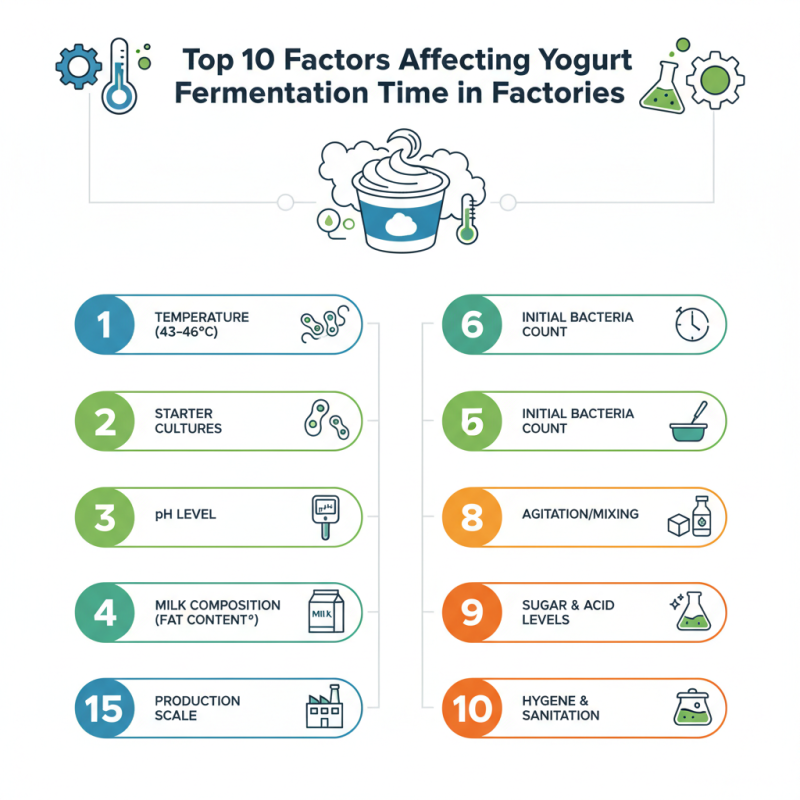
Top 10 Factors That Affect Yogurt Fermentation Time in Factories?

Types of Yogurt Cultures and Their Impact on Fermentation Time

The choice of yogurt cultures significantly impacts fermentation time. Different strains of bacteria produce varying amounts of lactic acid. This acid influences the thickness and flavor of yogurt. For instance, Lactobacillus bulgaricus and Streptococcus thermophilus are common cultures. They work together to ferment lactose, the sugar in milk. This process typically lasts around four to six hours under optimal conditions.

However, not all cultures perform equally. Some probiotic strains, like Lactobacillus acidophilus, ferment more slowly. This can lead to longer fermentation times. Predicting how these cultures will behave can be challenging. Fluctuations in temperature and pH levels influence the overall efficiency of fermentation. If the environment isn’t stable, it can disrupt the fermentation process. Additionally, using too many different cultures may create competition, slowing down fermentation.

Understanding these nuances can help in optimizing yogurt production. Manufacturers must experiment with different cultures. Observing the outcomes can provide insights into which combination works best. Sometimes, trial and error is necessary to achieve the desired yogurt texture and taste. Relying solely on established methods may overlook opportunities for improvement.

Temperature Control: The Key to Optimal Yogurt Fermentation

Temperature plays a crucial role in yogurt fermentation. It directly impacts the activity of cultures, affecting texture and flavor. Maintaining the right temperature is essential for consistent results. Research indicates that optimal fermentation occurs between 110°F and 115°F (43°C to 46°C). Deviating from this range can lead to undesirable outcomes.

In practice, many factories fail to regulate temperature precisely. Variability can arise from equipment malfunction or environmental changes. Data from industry studies show that fluctuations of just a few degrees can extend fermentation time significantly. An increase of two degrees could delay fermentation by 40 minutes. This inconsistency can compromise product quality.

Monitoring systems are vital. They ensure that temperatures remain stable throughout the process. However, many facilities still overlook this aspect. Continuous temperature checks can reveal insights into fermentation dynamics. Without accurate monitoring, achieving optimal yogurt quality is nearly impossible. Investing in robust temperature control systems could enhance productivity and product consistency, improving customer satisfaction.

Influence of Milk Composition on Fermentation Duration

The composition of milk plays a critical role in yogurt fermentation duration. Factors such as fat content, protein levels, and lactose concentration can significantly influence how quickly the fermentation process occurs. Higher fat content tends to slow down fermentation, while milk with increased protein can enhance the growth of starter cultures. This complex interaction requires careful consideration by dairy manufacturers.

Protein is particularly essential because it affects the viscosity and texture of the final product. If the milk lacks sufficient protein, the yogurt may end up too liquidy. This realization prompts dairies to experiment with different milk sources and compositions to optimize fermentation time. However, not all experiments yield perfect results.

Even subtle changes in lactose levels can impact fermentation speed. Milk with higher lactose can lead to faster acid production, influencing flavor and texture. Yet, too much lactose may result in an undesired sweetness. Manufacturers must constantly reassess these elements to find the right balance. Adjusting milk composition is a delicate task that often requires iterative testing.

Top 10 Factors That Affect Yogurt Fermentation Time in Factories

Factor Description Impact on Fermentation Time
Milk Composition The ratio of fat, protein, and lactose in milk. Higher protein levels can shorten fermentation time.
Starter Culture Microorganisms used to ferment yogurt. Different strains can affect the rate of acid production.
Temperature The temperature at which fermentation occurs. Higher temperatures typically speed up fermentation.
pH Level The acidity level of the milk before fermentation. Optimal pH can enhance fermentation efficiency.
Time Duration of fermentation process. Longer fermentation can lead to thicker yogurt, but has limits.
Mixing Speed Rate at which ingredients are mixed before fermentation. Affects the uniformity of culture distribution.
Ingredient Additives Additional ingredients like sweeteners or thickeners. Can slow or speed up fermentation based on composition.
Previous Batch Characteristics Quality and characteristics of the last batch produced. May affect consistency and fermentation time.
Hygiene Practices Sanitation standards in the production area. Improves batch quality and reduces spoilage risk.

Fermentation Equipment and Technology: A Role in Time Management

Yogurt fermentation is a delicate process, and equipment plays a vital role. Fermentation tanks must maintain specific temperatures. Inconsistent temperatures can lead to uneven fermentation. Equipment that lacks proper insulation may struggle. This can extend the fermentation time, affecting overall production efficiency.

Technology greatly impacts the timing of yogurt fermentation. Advanced monitoring systems help regulate conditions. These systems analyze temperature and pH levels in real-time. They allow for quick adjustments when needed. However, many factories still rely on outdated equipment. This reliance can cause delays and inconsistencies in the final product.

Trained staff are essential for optimal performance. Even with the best equipment, human error can introduce issues. Monitoring procedures should be regularly reviewed and updated. Many factories overlook this aspect. Emphasizing staff training and continual improvement can significantly enhance fermentation time. Ultimately, the combination of proper technology and skilled personnel drives success in yogurt production.

pH Levels and Their Effect on Yogurt Fermentation Rates

The pH level is crucial in yogurt fermentation. Typically, yogurt cultures thrive at a pH around 4.6. A pH drop accelerates the fermentation process but can lead to inconsistent texture. If the pH decreases too quickly, the resulting yogurt may become too sour, affecting consumer acceptance.

Various studies highlight that a pH range of 4.5 to 4.8 offers optimal texture and taste. Data from industry reports suggest that sourness increases significantly below this range. For instance, one report found that samples with a pH of 4.3 had 30% higher acidity compared to those at 4.6. This sharp contrast can deter consumers, making balancing pH essential for production.

Monitoring pH during fermentation is complex. Factors like temperature and culture concentration impact pH levels. If the fermentation temperature is too high, lactic acid bacteria may produce excess acid too quickly. This imbalance creates challenges for factories aiming for consistent product quality. Regular pH checks are necessary but can be time-consuming and affect overall efficiency.

FAQS

: How does milk composition affect yogurt fermentation?

: Milk composition significantly influences fermentation duration. Higher fat content slows fermentation, while increased protein enhances starter culture growth.

What role does protein play in yogurt texture?

Protein affects the viscosity and texture of yogurt. Insufficient protein can lead to a liquidy final product.

Why is lactose concentration important in fermentation?

Lactose levels impact fermentation speed. Higher lactose can quicken acid production, but too much may cause excessive sweetness.

How do temperature variations impact yogurt fermentation?

Inconsistent temperatures can lead to uneven fermentation, extending overall production time and affecting the final product.

Why is updated equipment crucial for yogurt production?

Advanced technology helps regulate fermentation conditions effectively. Outdated equipment can cause delays and inconsistencies in yogurt quality.

What can lead to errors in the fermentation process?

Human error during monitoring can introduce issues. Regular reviews and updates of procedures are often overlooked in many factories.

How can dairy manufacturers optimize fermentation time?

Continuous testing and adjustments of milk composition can help find the right balance for efficient fermentation.

What happens if fermentation conditions are not monitored?

Poor monitoring can lead to prolonged fermentation and may compromise product quality.

Is staff training important for yogurt production?

Yes, well-trained staff are vital for using equipment effectively and reducing errors in the fermentation process.

Are all experiments with milk sources successful?

Not all experiments lead to perfect results. Many adjustments require careful consideration and iteration to achieve desired outcomes.

Conclusion

The fermentation time of yogurt in factories is influenced by several critical factors. One of the primary considerations is the type of yogurt cultures used, as different strains can significantly affect the speed of fermentation. Temperature control also plays a vital role; maintaining optimal temperatures is essential for facilitating the right environment for cultures to thrive. Additionally, the composition of milk, including fat and protein content, directly impacts how quickly yogurt ferments.

Fermentation equipment and technology further contribute to efficient time management in production settings. Advanced tools can monitor and adjust necessary parameters, leading to a more consistent fermentation process. Lastly, pH levels during fermentation must be carefully managed, as they can influence fermentation rates. Understanding these core elements is essential for manufacturers looking to optimize production processes and answer the question of what affects yogurt fermentation time in factories.

Isabella

Isabella

Isabella is a dedicated marketing professional with a sharp focus on driving brand growth and engagement through strategic content creation. With an extensive background in digital marketing, she combines her passion for storytelling with her keen understanding of industry trends to deliver......