Fruit pulp can make a bottled drink look fresh and substantial. It can also settle into a dense layer at the bottom, leaving the first pour thin and the last one unusually pulpy. So, why does fruit pulp separate in bottled drinks? The main causes are gravity, differences in density, and pulp particles that are too large or prone to clumping. A thin liquid may not hold those particles evenly, especially during storage.
Food colloid scientist Dr. David Julian McClements’s research offers a useful principle: suspension depends on particle size, density, and the structure of the surrounding liquid. This is a practical summary, not a direct quotation. For beverage makers, it points toward several controls: refine pulp size, use suitable homogenization, and adjust the drink’s viscosity with an appropriate stabilizing system. Each choice needs testing in the actual recipe. A stabilizer that works in one juice may change another’s taste or texture.
Watch the bottle over time. A clear ring near the neck, a compact layer at the base, or pulp that returns only after vigorous shaking can reveal instability. Small changes in fruit variety, ripeness, or processing may also matter. And perfect suspension is not always realistic. Some settling may be acceptable if the drink redistributes with gentle shaking and still pours consistently. The goal is not just a smooth-looking bottle on filling day. It is a dependable drink from shelf to glass.
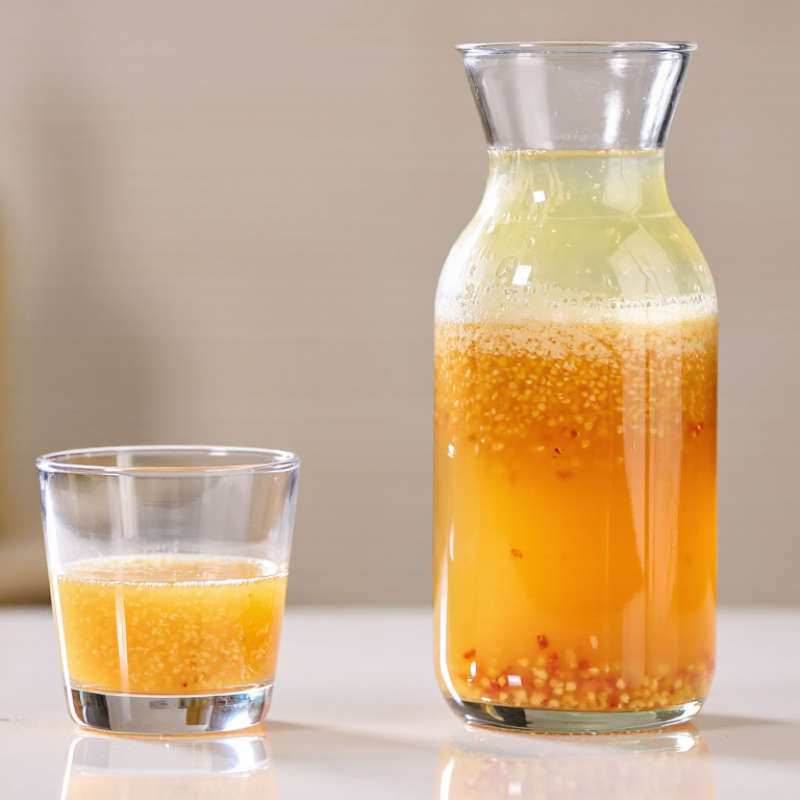
Fruit pulp separates when heavier particles settle or lighter particles rise. Large, uneven pulp pieces make this more visible, especially in thin drinks. Low viscosity offers little resistance to movement. Weak natural pectin, enzyme activity, and poor mixing can also reduce suspension stability. Tetra Pak’s Orange Book describes pectin and enzyme activity as important factors in juice cloud stability. A bottle that looks uniform at filling can still develop a clear layer during storage.
Particle size matters. Under Stokes’ law, settling speed rises with the square of particle diameter: if diameter doubles, settling may become about four times faster, assuming other conditions stay constant. This is a useful estimate, not a guarantee; real drinks contain irregular particles and complex fluids. Temperature and storage time can further change the result. Small changes matter.
Tips: Check pulp size and viscosity together, not separately. Review enzyme control and mixing conditions, then test bottles after realistic storage. Compare samples from the top, middle, and bottom. If separation remains, revisit the formulation—adding more stabilizer alone may hide the symptom without fixing its cause. Tetra Pak’s Orange Book is a practical industry reference, but each fruit blend needs its own trials.
How to Prevent Fruit Pulp Separation in Bottled Drinks?
Select and Prepare Pulp for Consistent Dispersion
Choose pulp with a uniform particle size and ripeness. Large pieces and fibrous strands can settle faster than fine pulp, leaving a clear layer near the top. Check a small sample in a glass before production; visible clumps or uneven color may signal inconsistent preparation. Small particles matter. If pulp comes from different batches, compare texture and thickness, since natural variation can affect how it disperses.
Remove seeds, tough fibers, and oversized pieces, then blend or sieve the pulp gently to create a more even texture. Avoid over-processing: excessive blending can release air and change the drink’s body. Mix pulp into the liquid gradually while stirring, rather than adding it all at once. A suitable stabilizing ingredient may help, but test it in a small batch first. Results depend on the fruit and recipe.
Tips: Keep the pulp evenly mixed before filling, and avoid long pauses during bottling. Check filled bottles after standing for several hours. Some settling may still occur; note how much, and adjust the pulp texture or mixing method in the next test.
| Control Point | Practical Starting Target | How It Helps Dispersion | Production Check |
|---|---|---|---|
| Pulp selection | Use ripe, sound fruit pulp with consistent color, aroma, and maturity; remove peel, seeds, and fibrous material when these are not part of the intended drink. | Consistent raw material reduces variation in particle size, density, and texture between batches. | Inspect each lot for visible defects, off-odors, and unexpected changes in texture or color. |
| Particle size | For a smooth drink, trial a pulp screen in the approximate 0.5–1.0 mm range. For a visibly pulpy drink, a coarser screen may be suitable; confirm the target with product testing. | More uniform particles are generally easier to distribute evenly than a mixture containing very large fibers and fine solids. | Check screen condition and compare pulp texture across batches. Set the final size for the fruit and desired mouthfeel. |
| Pulp conditioning | Mix pulp thoroughly before dosing. If using frozen pulp, thaw under controlled chilled conditions and remix after thawing. | Pulp can settle or separate during storage; uniform conditioning helps prevent concentrated or inconsistent additions. | Check for settled layers, lumps, and temperature differences before blending. |
| Ingredient addition | Add pulp gradually into a moving liquid stream rather than tipping it all into a stationary tank. | Gradual addition helps wet particles and reduces clumping, which can otherwise lead to uneven dispersion. | Observe the tank surface and sample from different locations for visible clumps or uneven pulp concentration. |
| Mixing | Use enough agitation to circulate the full tank without drawing excessive air. Establish mixing time and speed through plant-scale trials. | Good circulation keeps particles distributed during blending and transfer; excessive air can increase oxidation and foaming. | Compare samples from the top, middle, and bottom of the tank before filling. |
| Homogenization or high-shear treatment | Trial the lowest effective treatment intensity first. Adjust pressure, passes, or mixing energy to suit the pulp and desired texture. | Reducing oversized particles can improve uniformity, but excessive treatment may alter the intended pulp texture or increase foaming. | Compare particle appearance, mouthfeel, and separation after treatment; do not rely on equipment settings alone. |
| Suspension support | If needed, select a food-grade stabilizer permitted for the product and market, and follow its supplier’s use instructions and applicable regulations. | Some stabilizers increase liquid viscosity or help limit particle movement, slowing settling during storage. | Assess texture, flavor release, pourability, and separation at the intended storage temperature. |
| Air management | Minimize air entrainment during blending and transfer; use deaeration where suitable for the process. | Less entrained air can reduce foaming and help maintain consistent filling and product appearance. | Check for persistent foam and excessive bubbles after mixing and before filling. |
| Heat treatment and filling | Use a validated time-and-temperature process and filling method appropriate to the drink’s formulation, packaging, and food-safety requirements. | Processing can change pulp texture and liquid viscosity, so dispersion should be evaluated after the complete process. | Measure pulp distribution in finished bottles, not only in the blend tank. |
| Storage and shelf-life testing | Test bottles under the intended storage conditions and over the full proposed shelf life. | Temperature, time, and product composition can affect settling; a fresh sample may not predict later separation. | Record sediment layer, pulp distribution after gentle inversion, appearance, and sensory quality at planned intervals. |
Note: These are formulation and process-development starting points, not universal specifications. Fruit type, pulp composition, acidity, processing equipment, and packaging all affect performance. Confirm the final process through product-specific trials, shelf-life evaluation, and food-safety validation.
How to Prevent Fruit Pulp Separation in Bottled Drinks?
Balance the Drink’s Formulation
Fruit pulp settles when particles are larger or heavier than the surrounding liquid. Formulation can slow this process by improving the drink’s viscosity and keeping particles evenly dispersed. Too little stabilizer may leave a clear layer at the top and dense pulp at the bottom. Too much can make the drink feel sticky or mask its fresh fruit character. Small changes matter.
Tips: Adjust one ingredient at a time. Check the bottle after standing, not only right after mixing. A quick shake can hide separation.
Start with pulp size and fruit solids, then assess acidity, sweetness, and thickness together. Pectin or another suitable hydrocolloid may help suspend fine pulp, but its performance depends on the fruit and processing conditions. High acidity can alter how some stabilizers work, so bench trials are more reliable than guessing. I’ve seen a formulation look smooth in a beaker but separate after filling; it’s an easy detail to miss. Compare samples after several hours and again the next day. If sediment remains, consider finer pulp, a modest viscosity adjustment, or improved homogenization. Keep the texture pourable, and record each trial so a successful balance can be repeated.
How to Prevent Fruit Pulp Separation in Bottled Drinks? — Balance the Drink’s Formulation
In this illustrative screening example, separation decreases as pectin increases. These values are not measured product data: the effective stabilizer level depends on the fruit, pulp particle size, acidity, and processing conditions. Test the finished formulation over its intended shelf life.
Fruit pulp separates when particles settle, float, or gather into visible layers during storage. Homogenization helps by breaking larger pulp clusters into smaller, more evenly distributed particles. The drink looks smoother. It can also feel more consistent from the first pour to the last. However, homogenization alone may not keep every formulation stable, especially when pulp size, acidity, and storage temperature vary.
A practical starting point is to homogenize the juice base and pulp under controlled conditions, then check the particle distribution and mouthfeel. Excessive treatment can change texture or create unwanted foam, so compare several pressure settings rather than assuming more is better. Stabilizers such as pectin or gellan gum can slow particle movement by increasing the liquid’s ability to hold pulp in suspension. Choose the type and level to suit the recipe, and disperse it thoroughly to avoid clumps. Small details matter.
Hydration and mixing order deserve attention. Add the stabilizer as recommended for the ingredient, then allow enough mixing time before filling. Test finished bottles at cool and room temperatures, and inspect them after several days for a pulp ring, sediment, or uneven pours. Test it cold. A slightly thicker drink may resist separation but feel heavy, so there is often a trade-off. Pilot batches reveal more than a single appearance check.
How to Prevent Fruit Pulp Separation in Bottled Drinks?
Control Bottling and Storage Conditions
Fruit pulp settles when gravity pulls particles downward, especially during long, warm storage. Codex Alimentarius CXS 247-2005 sets 11.2° Brix as the minimum for reconstituted orange juice. This compositional benchmark does not guarantee suspension, but it shows why consistent formulation matters. Check pulp concentration and soluble solids from batch to batch. During filling, keep the tank gently mixed and maintain a steady flow. Vigorous pumping can introduce foam and disrupt a uniform fill. Watch the first and last bottles; their pulp levels may differ.
Storage conditions matter just as much. Keep bottles away from sunlight, heaters, and repeated temperature swings. Use the product’s validated storage range rather than assuming one temperature suits every formula. Record storage temperature and settling at set intervals, including after transport. A thin layer at the bottom may be acceptable; a hard, compact deposit can signal poor suspension or excessive storage stress. Honestly, one test is rarely enough.
Tips: Gently recirculate the batch before filling. Avoid long pauses with the tank mixer off. Compare clear bottles from different filling times, and note visible pulp bands. If separation persists, review particle size and stabilizer levels with a qualified food technologist.
Gravity can pull pulp downward during storage. Larger clusters may settle, float, or form visible layers. Warm, lengthy storage can make separation more noticeable.
It breaks larger pulp clusters into smaller particles. This can make the drink look smoother and feel more consistent. More treatment is not always better.
Not in every recipe. Pulp size, acidity, and storage temperature can affect stability. Compare several treatment settings and check the finished drink’s texture.
Pectin or gellan gum can slow pulp movement by thickening the liquid. Choose a suitable type and level for the recipe. Too much may make the drink feel heavy.
Follow the ingredient’s recommended addition method and allow enough mixing time before filling. Disperse it thoroughly to avoid clumps. Small details matter.
Inspect bottles after several days at cool and room temperatures. Look for a pulp ring, bottom sediment, or uneven pours. Test it cold, too.
Keep the tank gently mixed and maintain a steady filling flow. Vigorous pumping may create foam. Check bottles from the start and end of filling.
Keep bottles away from sunlight, heaters, and repeated temperature changes. Record temperature and settling during storage and after transport. One check is rarely enough.
A thin bottom layer may be acceptable, while a hard, compact deposit can signal trouble. The difference deserves a closer look.
Preventing fruit pulp separation in bottled drinks starts with understanding why does fruit pulp separate in bottled drinks. Differences in particle size, pulp density, and the liquid’s thickness can cause solids to settle or rise during storage. Select fresh, consistent pulp and prepare it by removing oversized fibers and blending it evenly. A balanced formulation also matters: suitable acidity, sugar content, and viscosity can help keep the pulp distributed throughout the drink.
Homogenization reduces pulp particles and supports a more uniform texture, while carefully selected stabilizers can slow separation without overpowering the drink’s flavor. Finally, control bottling and storage conditions. Mix the beverage consistently before filling, limit unnecessary air exposure, and use appropriate processing and storage temperatures. Together, careful ingredient preparation, formulation, processing, and handling can improve visual consistency and maintain a more appealing bottled drink over time.

CarniTe Machinery